
Key points:
- UK pound seeks direction
- Growth inline with forecast
- Just fine amid energy crisis
Britain’s economy held up better than feared, but expensive energy threatens to squeeze growth and rekindle inflation.
🌡️ Britain keeps growth alive
- The UK economy expanded 0.4% in the second quarter, matching forecasts but slowing from 0.6% during the first three months of the year.
- Not spectacular, not disastrous — more of an economically respectable cup of tea while an energy crisis rattles the windows.
- June GDP rose 0.3% from May, beating expectations, after the economy flatlined during the previous month.
- Services grew 0.4%, helped by technology, consumer activity, sunny weather and the World Cup. Apparently football remains a valid component of national economic policy.
⚖️ Pound gets a mixed message
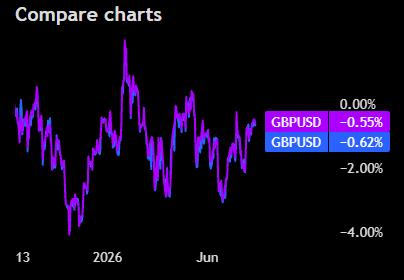
- GBPUSD hovered under $1.35 as traders digested resilient growth against a softer US dollar. The report avoided a downside shock, but 0.4% growth hardly screams economic takeoff.
- The dollar weakened after benign US consumer inflation reduced expectations for a Federal Reserve rate increase in September. That supports the Cable, but Thursday’s US producer-price report could quickly change the calculation.
- Softer US inflation helps sterling, while stronger UK inflation could keep Bank of England policy tighter — good for the pound, considerably less charming for British households.
🔥 Energy threatens an inflation encore
- UK headline inflation eased to 2.6% in June, but the Bank of England expects it to accelerate toward 3.2% by year-end as elevated energy costs filter through the economy. That creates a nasty combination: slower growth, higher prices and very few pleasant choices.
- July inflation lands on August 19. A hotter reading could strengthen expectations for another BOE rate increase and lift sterling; a cooler print could encourage a longer pause.
- Technically, $1.34 remains the nearby support area, with $1.35–$1.3550 forming initial resistance and $1.35 guarding a larger breakout. Fundamentals will decide whether sterling climbs through those levels or returns downstairs to reconsider what “resilient growth” was supposed to mean.
Source: Tradingview

No responses yet