
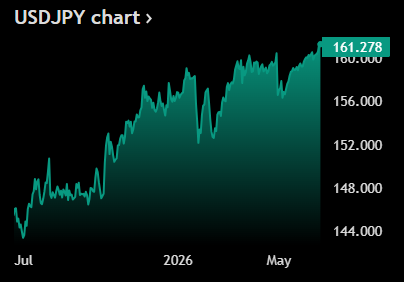
Key points:
- Dollar creeps up
- Yen staring at 40-year low
- An intervention is on the cards
US stocks are closed Friday so the action could easily spill over to the FX board where Japan is in hot water.
🚨 Yen Nears the Danger Zone
- The Japanese yen cracked through the 161.50 mark against the US dollar late Thursday, sliding as far as 161.80 and reaching its weakest level since July 2024. One more push above 161.96 and traders will be staring at levels not seen since 1986.
- The USD/JPY move gathered pace after Japanese stock markets closed for the day, catching attention across FX desks worldwide. With US equities shut Friday for Juneteenth, the spotlight could shift easily to currencies and Japan’s increasingly uncomfortable position.
- Currency intervention chatter is back in fashion. When traders talk about intervention, they mean a government stepping into markets and buying or selling currencies directly to influence exchange rates. Japan has done it before — and markets remember.
🏦 Tokyo’s Warnings Get Louder
- Japanese officials are once again sharpening their language. Finance Minister Satsuki Katayama reportedly told G7 counterparts that Tokyo stands ready to take “decisive action” against speculative moves if necessary.
- Those warnings aren’t coming out of nowhere. Japan already spent more than $70 billion on interventions earlier this year, attempting to slow the yen’s decline. The effect? Temporary. The dollar eventually resumed its climb.
- Meanwhile, Bank of Japan Deputy Governor Ryozo Himino said policymakers are closely watching currency swings because of their impact on inflation and economic stability. Translation: they’re not ignoring this move, even if they’re not pulling the trigger yet.
⚖️ Strong Dollar, Weak Yen Problem
- The yen remains trapped between two powerful forces. On one side sits a stronger US dollar fueled by expectations that the Federal Reserve could still raise rates. On the other sits Japan, where interest rates remain comparatively low despite the recent hike.
- The Bank of Japan recently lifted borrowing costs to their highest level since 1995, but even that wasn’t enough to spark a lasting yen recovery. Markets appear far more interested in the widening gap between US and Japanese yields.
- A weaker yen helps exporters by making Japanese goods cheaper overseas, but it also raises the cost of imports. That means pricier fuel, food, and raw materials for households. Great for some corporate earnings, less great when your grocery bill starts looking like a big-ticket purchase.
Source: Tradingview

No responses yet