
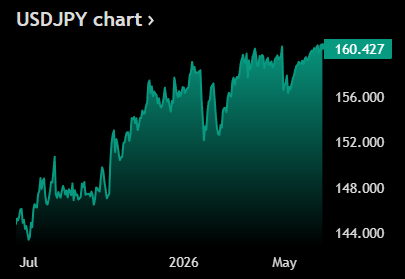
Key points:
- Dollar steady above ¥160.20
- BoJ hikes interest rates to 1%
- Is the yen getting ready for a run?
Not doing down without a fight, apparently. The greenback was standing tall against the yen after the BoJ’s big move.
🏦 BoJ Goes for the 1%
- The Bank of Japan delivered its first rate hike since December, lifting its benchmark interest rate to 1% from 0.75%. That puts borrowing costs at their highest level since 1995 — a year when dial-up internet was still cutting-edge technology.
- The move was widely expected by economists and investors. The central bank voted 7-1 in favor of the increase as policymakers grew increasingly concerned that higher energy prices could keep inflation running hotter than planned.
- In its statement, the BoJ warned that underlying inflation could exceed its 2% target. Translation: prices may keep rising faster than officials are comfortable with, forcing them to stay on tightening watch.
💴 Yen Shrugs, Dollar Stands Tall
- Despite the headline-grabbing rate hike, the yen barely reacted. The USD/JPY hovered around the ¥160.20-¥160.30 zone, looking remarkably calm for a currency pair digesting the highest Japanese interest rates in 31 years.
- Normally, higher rates support a currency because they can attract foreign capital seeking better returns. This time, traders seemed unimpressed, likely because the move wasn’t a surprise to anyone.
- The result? The dollar kept its footing. The greenback remains supported by relatively high US yields and a market that still sees global inflation risks lingering in the background.
🌍 Energy Risks Still Loom Large
- While a US-Iran truce has improved sentiment, the economic consequences of the conflict haven’t disappeared. Central banks are still dealing with elevated energy costs, weaker consumer confidence, and the possibility that tensions flare up again.
- The BoJ specifically highlighted Middle East developments as a key risk factor. Energy-importing nations like Japan remain particularly vulnerable when oil markets become unpredictable and supply chains get disrupted.
- Attention now shifts to other major central banks. The Federal Reserve and its peers face a similar balancing act: raise rates to fight inflation or ease up to protect growth. It sounds simple until you’re responsible for a multi-trillion-dollar economy.
Source: Tradingview

No responses yet