
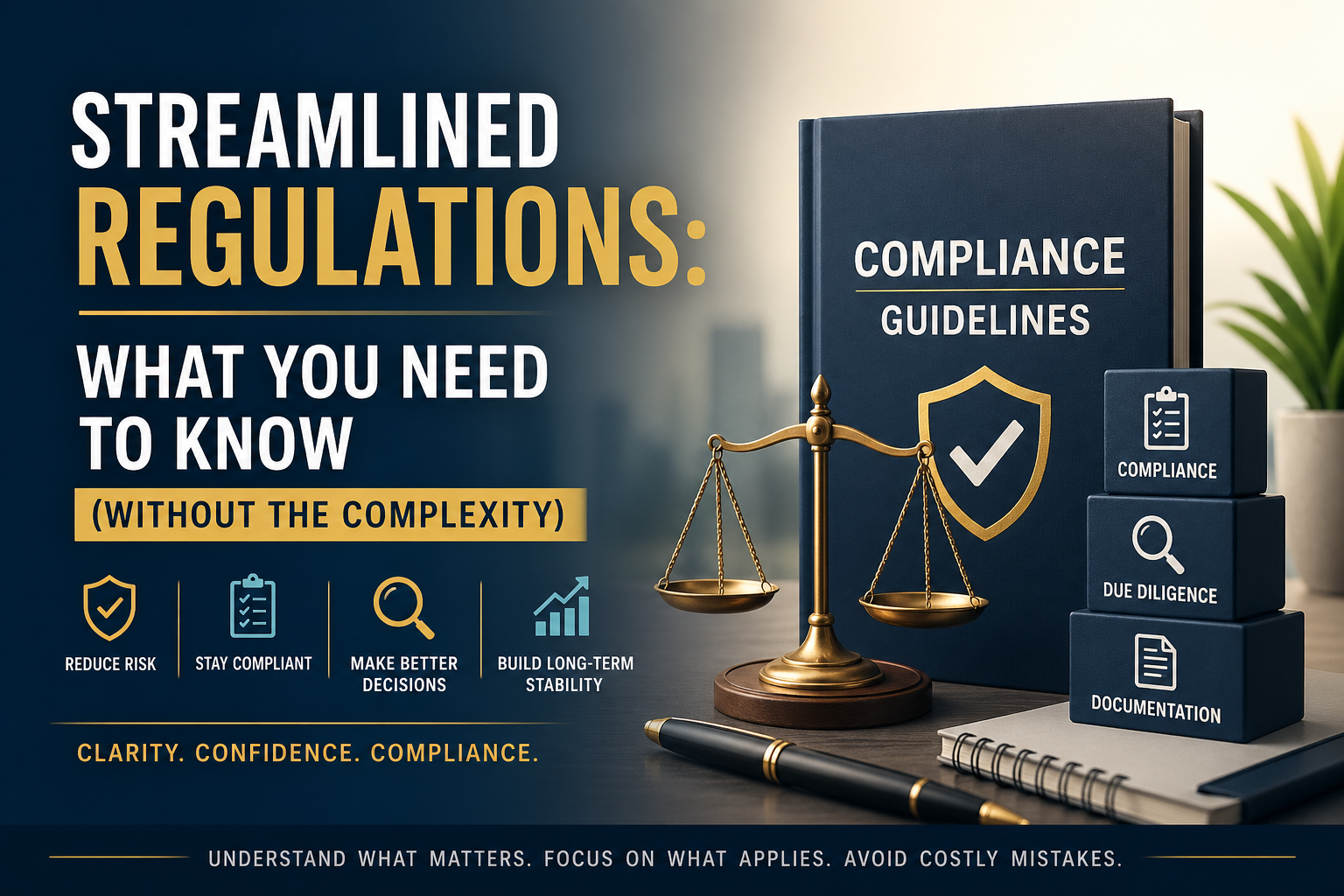
Streamlined Regulations: What You Need to Know (Without the Complexity)
Why Regulations Feel Overwhelming (But Don’t Have to Be)
Regulations often feel confusing, restrictive, and easy to postpone.
That’s exactly where the problem starts.
Most compliance issues don’t come from regulations themselves, they come from misunderstanding them.
As a Regulatory Affairs Advisor, I’ve seen this pattern repeatedly:
Avoidance creates risk. Clarity eliminates it.
Regulations aren’t barriers.
They are structured systems designed to:
- Protect financial environments
- Ensure accountability
- Reduce instability
This guide simplifies what truly matters, so you can stay compliant without overcomplicating everything.
1. Regulations Are Structure, Not Restrictions
When you understand the purpose of regulations, everything shifts.
They exist to:
- Protect systems from misuse
- Maintain trust in financial environments
- Establish clear operational boundaries
Without regulation, systems become unpredictable, and risk increases.
Stop seeing compliance as a burden. Start seeing it as a strategic advantage.
2. The Biggest Compliance Mistake: Treating It as Optional
One of the most costly assumptions?
“Compliance is just paperwork.”
It’s not.
Regulations define:
- What is allowed
- What is required
- What is actively monitored
Ignoring compliance doesn’t reduce its impact, it multiplies your risk exposure.
3. The Only Compliance Foundations You Actually Need
You don’t need to understand everything.
You need to understand the fundamentals:
- Compliance → Following required standards
- Due diligence → Verifying before making decisions
- Documentation → Keeping accurate, traceable records
These aren’t complex systems.
They’re disciplined habits that prevent costly mistakes.
4. Where Most People Get It Wrong
Regulatory issues rarely come from complexity.
They come from simple, avoidable behaviors:
- Assuming something is “too small to matter.”
- Delaying understanding until it’s urgent
- Acting on incomplete or incorrect information
These mistakes seem minor, but they compound quickly.
5. The Real Cost of Ignoring Regulations
Regulatory consequences don’t always show up immediately, but when they do, they’re significant:
- Financial penalties
- Operational restrictions
- Reputational damage
In most cases, these outcomes are preventable with basic awareness and proactive action.
6. How to Stay Compliant Without Overcomplicating It
You don’t need to master every regulation.
You need a simple, repeatable approach:
- Learn what applies to your business or role
- Ask questions early
- Verify before acting
- Avoid assumptions
Clarity reduces risk. Simplicity sustains compliance.
7. What You Don’t Need to Overthink
Regulations feel overwhelming when you try to understand everything at once.
Instead, focus on:
- What applies to you
- What is required
- What needs verification
Not everything matters equally.
Prioritize what impacts your decisions directly.
Clarity Is Your Competitive Advantage
Regulations are not the problem.
Lack of understanding is.
When approached correctly, regulations become:
- A framework for better decision-making
- A system for reducing risk
- A tool for long-term stability
The goal isn’t complexity.
It’s clarity.

No responses yet