
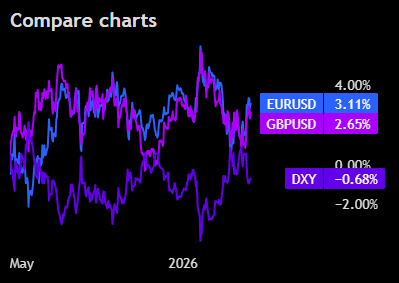
Key points:
- Dollar pushes higher
- Rival currencies fall
- War tensions remain
Greenback suddenly got fashionable again after weekend negotiations failed. The war premium is back in action.
💵 Dollar Pops on Blockade Shock
- The US dollar index DXY jumped above 99.00 early Monday after Donald Trump announced a naval blockade targeting the Strait of Hormuz, reviving geopolitical risk and pushing traders back into the world’s favorite liquidity shelter.
- The move followed failed weekend negotiations in Islamabad between US and Iranian officials, raising expectations that tensions could stretch longer than markets had priced in just days earlier.
- Trump said the US Navy would begin blocking vessels tied to Iranian ports “effective immediately,” while allowing transit to non-Iranian destinations. Markets reacted fast — because Hormuz headlines rarely arrive without inflation implications attached.
🛢️ Oil Spike Powers Safe-Haven Bid
- WTI crude surged nearly 7.9% to around $104 per barrel as traders priced in supply disruption risk through the Strait of Hormuz — one of the most critical arteries for global energy shipments.
- Higher oil tends to strengthen the dollar during geopolitical shocks because investors rush into cash and cash-like assets while also reassessing inflation risks. That combination makes the greenback both a shelter and a hedge.
- US Central Command confirmed maritime restrictions around Iranian ports would begin Monday morning. Meanwhile, reports suggest Washington is weighing renewed strikes — a backdrop that keeps volatility elevated across currencies and commodities alike.
🌍 FX Rivals Slip as Buck Rises
- The EURUSD traded around $1.1660–$1.1690 while GBPUSD hovered near $1.34, both drifting lower as the dollar regained its footing.
- The USD/JPY stayed elevated near the ¥160 level, highlighting persistent interest-rate divergence between the US and Japan. Higher US yields continue to pull capital toward the dollar like gravity with a spreadsheet.
- Although the early dollar rally cooled slightly into the European session, the gap higher signals the return of a classic “war premium” — the extra demand investors place on safe assets when geopolitics starts writing the headlines again.
Source: Tradingview

No responses yet