
Key points:
- Pound tops $1.34
- April GDP shranks 0.1%
- Bank of England’s headaches
Gain was only a few pips, though. Nothing major. But a slowing economy could force the Bank of England to think twice before hiking rates.
📉 Growth Engine Loses a Little Steam
- The GBPUSD pair rose a bit after the British economy shrank 0.1% in April, matching economist forecasts and marking a slowdown from March’s 0.3% expansion.
- Before that, GDP grew 0.4% in February and was flat in January, showing momentum has been fading as the year progresses.
- April’s weakness was partly a reversal of March’s unusually strong activity. Consumers stocked up on fuel and businesses accelerated production ahead of expected energy disruptions tied to the Middle East conflict, creating a tough comparison for the following month.
- Looking beyond a single month, the picture was less gloomy. The economy expanded 0.7% over the three months through April versus the prior three-month period, exactly in line with expectations and suggesting growth hasn’t completely stalled.
💷 Pound Finds a Few Pips of Strength
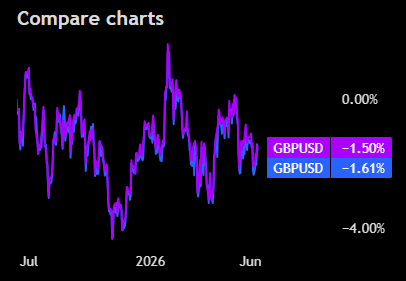
- Following the soft GDP report, GBPUSD climbed roughly 20 pips and moved back above the $1.34 level. A pip is the smallest standard move in most currency pairs, meaning the gain was noticeable but hardly the sort that has traders forgetting to eat.
- The pound has spent much of recent weeks trapped in a fairly tight range between $1.33 and $1.35. Compared with the fireworks in stocks, commodities, and crypto, sterling has been more like the person quietly reading in the corner of the party.
- Currency traders appear reluctant to make big directional bets ahead of fresh economic data and next week’s Bank of England decision, keeping volatility relatively contained despite major geopolitical developments elsewhere.
🏦 BOE Faces a Tricky Balancing Act
- Rising energy costs linked to strikes on infrastructure and disruptions around the Strait of Hormuz have fueled inflation concerns across Europe. Higher oil prices can filter through to transportation, manufacturing, and household bills.
- The Bank of England had been considering whether additional rate hikes might be needed to contain inflation pressures. Interest-rate hikes typically support a currency by increasing returns on local assets and attracting capital.
- A weaker growth backdrop complicates that decision. If the economy is already slowing, policymakers may think twice before tightening too aggressively. That leaves sterling caught between two competing forces: sticky inflation and softer economic activity.
Source: Tradingview

No responses yet