
Key points:
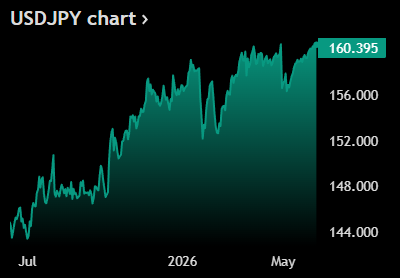
- Dollar gains above ¥160.40
- Yen sinks on new war jitters
- US inflation report imminent
One-month high in the dollar-yen stokes talks of intervention among FX circles. Will Japan do it again? And to what extent?
💵 Dollar Flexes, Yen Wobbles
- The USD/JPY pair climbed above ¥160.40 on Wednesday, reaching its highest level in six weeks as investors rushed back into the US dollar. When war-related risks flare up, the greenback tends to put on its safe-haven cape and attract global capital.
- The move followed renewed tensions between the US and Iran after Washington launched strikes in response to the downing of a US Army Apache helicopter near the Strait of Hormuz. The incident has cast fresh doubt on an already fragile ceasefire effort.
- Iran has not directly claimed responsibility for the helicopter incident, but traders aren’t waiting around for courtroom-level evidence. In FX markets, uncertainty alone is often enough to push money toward perceived safe assets like the greenback.
🚨 Intervention Talk Is Back
- The dollar-yen could now be approaching ¥160.70, a level traders know very well. That’s roughly where Japanese authorities stepped into the market on April 30, selling tens of billions of dollars in an attempt to stop the yen’s slide.
- Japan spent a record ¥11.7 trillion, or roughly $73 billion, on currency intervention between April and May, reports suggest. The effort briefly pushed the yen from nearly ¥161 per dollar to around ¥155 before market forces gradually took control again.
- Intervention is essentially a government entering the market to buy or sell currency directly. In Japan’s case, that means selling foreign reserves and buying yen. The challenge? Markets can absorb a lot of firepower when interest-rate differences remain wide.
🏦 Tokyo Faces Tough Choices
- The yen’s weakness reflects a lot more than war tremors. Japan continues to import most of its energy in dollars, and higher oil prices tied to Middle East tensions increase demand for greenbacks while putting additional pressure on the local currency.
- But also, the Bank of Japan’s cautious approach to raising interest rates has weighed on the yen. While US rates remain elevated and traders increasingly price in the risk of another Fed hike, yield-hungry investors continue favoring dollar-denominated assets.
- Japan still holds roughly $1 trillion in foreign assets that could theoretically be deployed to support the yen. The question isn’t whether Tokyo can intervene again. The question is whether it wants to fight the market once more if the major pair pushes beyond ¥160.70.
Source: Tradingview

No responses yet