
Key points:
- Pound drops to $1.3380
- Inflation undershoots calls
- Prices still expected to rise
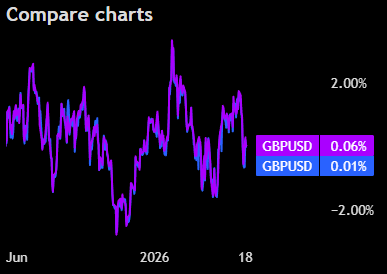
UK currency was changing for $1.34 prior to the inflation report’s release. After the news dropped, 20 pips were erased. And then recouped.
💷 Pound Trips on CPI Surprise
- The GBPUSD slipped briefly Wednesday after UK inflation cooled more than expected in April, taking some steam out of rate-hike bets. The pound pair dropped roughly 20 pips after the release, sliding back from the $1.34 area. But that was short-lived as the exchange rate climbed back above $1.34 a few minutes later.
- UK consumer inflation slowed to 2.8% in April from March’s 3.3%, according to the Office for National Statistics. Economists surveyed by Reuters were expecting a hotter 3% reading, so traders were caught leaning slightly the wrong way.
- For currency markets, lower inflation can mean fewer interest-rate hikes from the central bank. And fewer hikes generally weaken a currency because investors earn less yield holding it. Forex traders call this the “rate differential game.”
🏦 BoE Faces a Tough Balancing Act
- The numbers arrive at an awkward time for the Bank of England, which is trying to contain inflation without crushing an already-fragile economy. Think of it as trying to land a plane during turbulence while someone keeps changing the runway.
- Even with inflation cooling, policymakers remain nervous about energy-driven price pressures linked to the Middle East conflict. Oil supply disruptions and attacks around the Strait of Hormuz are still threatening to push fuel and commodity costs higher globally.
- The BoE kept interest rates unchanged at 3.75% during its April meeting, but some officials already support raising borrowing costs sooner rather than later. Markets now expect at least two hikes this year.
📉 Growth Worries Linger Too
- Before the US and Israeli strikes on Iran in late February, traders were actually preparing for UK rate cuts. Fast-forward a few months and the conversation has completely flipped toward inflation containment and tighter monetary policy.
- Still, there’s a catch. Higher interest rates can slow economic growth and pressure hiring. UK labor-market data released Tuesday showed unemployment ticking up to 5% in the three months through March from 4.9% previously — not catastrophic, but hardly inspiring.
- Sterling traders are now facing a messy setup. Cooling inflation weakens the pound short-term, but persistent energy risks could eventually force the BoE back into hawkish mode. Translation: expect more sharp swings and fewer relaxing afternoons for FX speculators.

No responses yet