
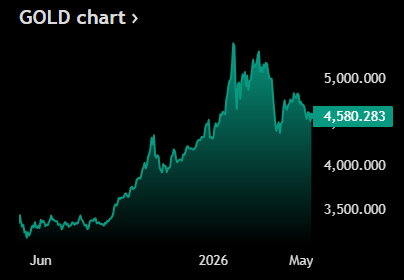
Key points:
- Gold prices seesaw
- Markets get jittery
- Best practices?
Swings of $50 to $150 on the daily aren’t unusual in this gold market. But what’s a trader to do? Step back is one.
🪙 Volatility, the Main Character
- Gold XAUUSD is swinging like it had three espressos — daily moves of $50 to $150 are becoming routine. Tuesday saw a $40 bounce toward $4,550 after Monday’s $130 drop to near $4,500. Not exactly a calm tape.
- The whipsaw isn’t random (although some would argue it might be noise). US–Iran tensions around the Strait of Hormuz are injecting headline risk. One news alert can flip sentiment faster than your stop-loss can react.
- This environment can be brutal if you’re after those intraday gains. Wide ranges sound exciting, but they also mean wider stops, faster reversals, and a higher chance of getting chopped up. Volatility cuts both ways — and lately, it’s been cutting deep.
📉 Macro Forces Pull Both Ways
- Gold’s bounce from earlier today is being capped by a stronger US dollar and rising bond yields. A stronger dollar makes gold pricier for foreign buyers, while higher yields offer returns elsewhere — both are headwinds for a non-yielding asset like gold.
- Oil isn’t helping either. Brent crude oil holding above $113 keeps inflation fears alive. That pushes expectations for higher interest rates — and higher rates tend to weigh on gold demand.
- Quick jargon check: gold is “non-interest-bearing,” meaning it doesn’t pay yield like bonds. When interest rates rise, investors often rotate into assets that do pay — making gold relatively less attractive.
🧭 What To Do
- First option: step back. Seriously. When volatility spikes, reducing position size or staying flat is a strategy. Preserving capital and staying in the game to see tomorrow matters more than trying to catch every move.
- Second: zoom out. Look for higher-timeframe levels — major support and resistance — instead of chasing intraday noise. In choppy markets, bigger-picture structure tends to hold better than short-term signals.
- Third: watch the calendar. Key US data this week — job openings, ADP employment, and nonfarm payrolls — can reset expectations for Federal Reserve policy. Right now, markets are dialing back rate-cut bets and even pricing in future hikes.
Source: Tradingview

No responses yet